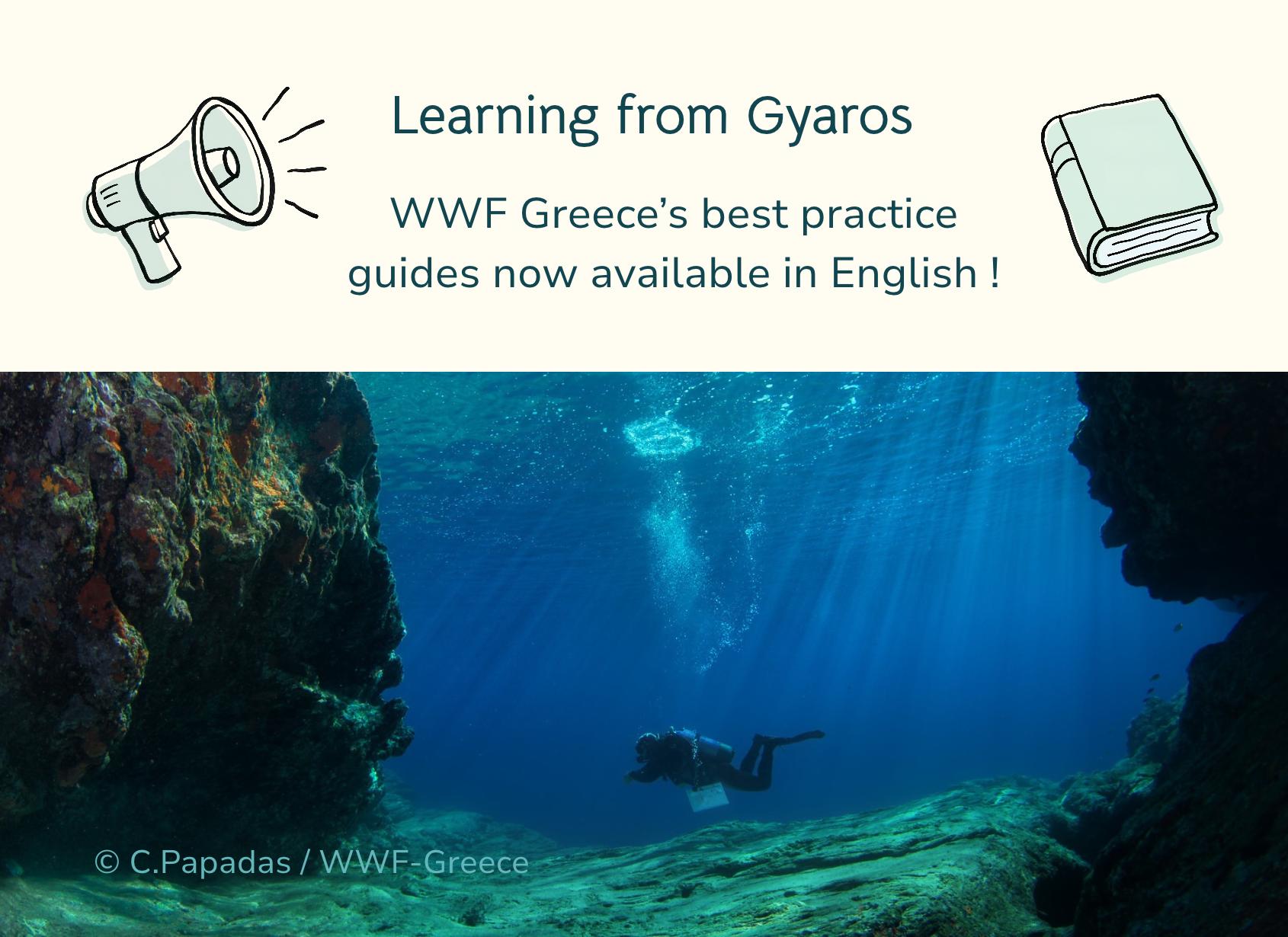
WWF Greece has recently made its best practice guides available in English. The guides draw on the experience of Gyaros, one of the pilot sites in the BiodivEarth Community of Practice.
For around 15 years, WWF Greece has worked in Gyaros on the conservation of the island and its surrounding marine area. Over this time, the organisation has developed and tested different approaches to conservation, surveillance and local engagement, building up a wealth of experience along the way.
This long-term work now provides the basis for a set of guides that make some of this experience accessible to a wider audience.
From Gyaros to a wider audience
Gyaros is a small, uninhabited island in the Cyclades (Greece). Its surrounding waters form an important marine protected area, where WWF Greece has worked alongside other actors to support the conservation and management of the area.
The guides cover two main topics: surveillance and guarding and participatory processes. They offer practical insights into approaches developed through work in Gyaros, while raising questions that are relevant to conservation initiatives in other contexts: How can surveillance be organised effectively? How can local stakeholders be involved? And what can be learned from putting these approaches into practice? Documenting this experience brings together the vast knowledge accumulated through this work and makes it available for further discussion, exchange and learning.
Learning across the BiodivEarth Community of Practice
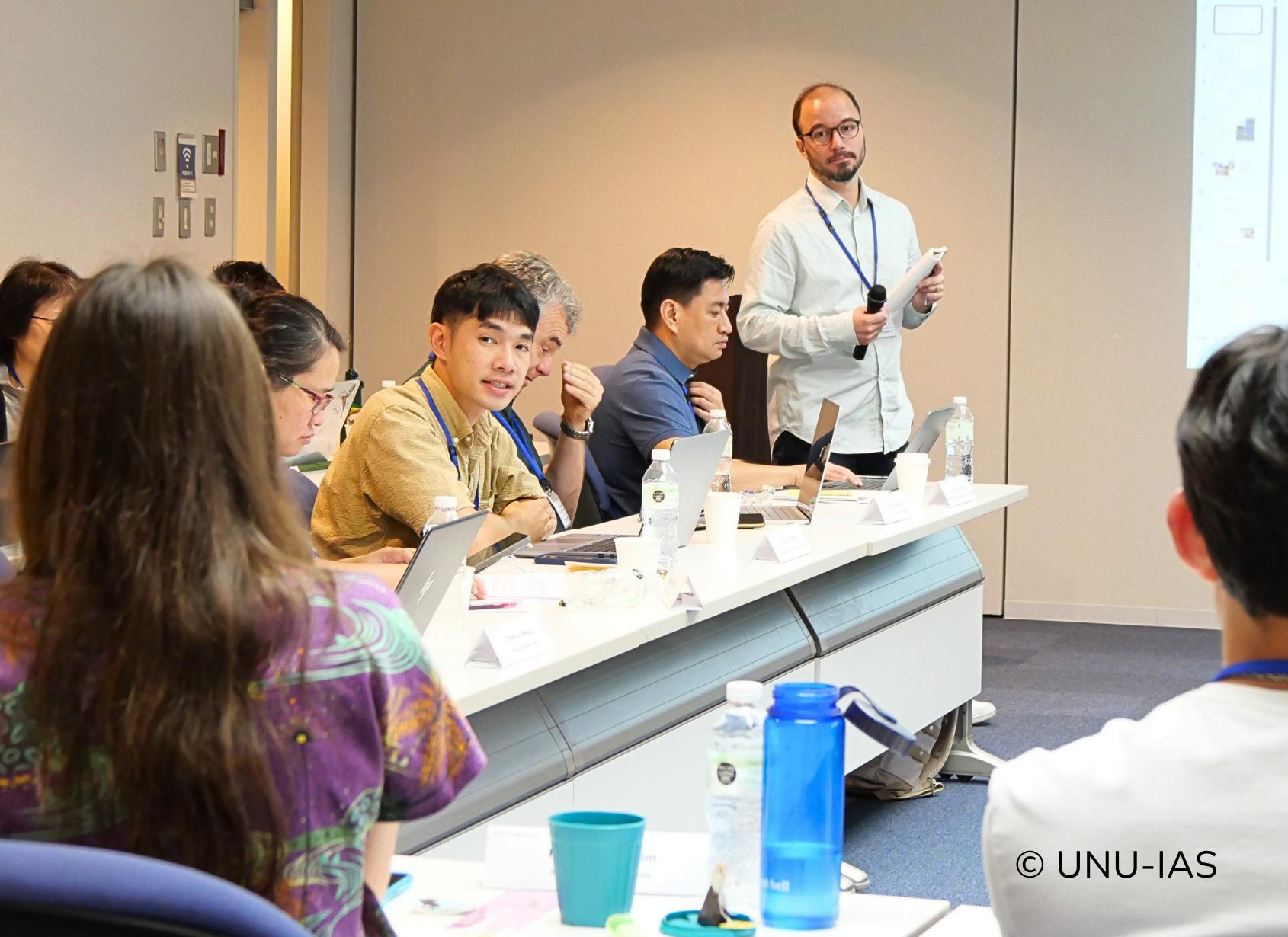
This approach to sharing knowledge is closely connected to our project. Indeed, during our Community of Practice workshops, pilot sites, researchers and global initiatives exchange experiences and perspectives. Through these exchanges, we explore what has contributed to resilience in different socioecological land ans seascapes, from the actions taken and actors involved to the challenges addressed and milestones that have helped move things forward. The experience of each site can therefore contribute to a broader understanding of what can support resilience in different contexts.
Towards a Catalogue of Solutions
As part of our work on developing a catalogue of solutions, we seek to capture and articulate lessons from local stewards about what has contributed to sustaining resilience in their sites. At the core of this work is understanding what has worked and why: what was done, by whom, in response to which challenge and what made it effective in that particular context.
The aim is not to simply copy solutions from one place to another. Contexts differ, but understanding what has worked and why can help others identify approaches or principles that may be adapted to their own landscapes and seascapes. The catalogue will bring together individual and collective experiences from across the BiodivEarth Community of Practice. This is why WWF Greece’s guides provide a great example of the kind of practical knowledge that can contribute to this work.
Continuing the exchange
Congratulations to the WWF Greece team on this important work and on making these resources available to a wider audience.
For BiodivEarth, the guides are also an opportunity to continue learning from the experience of Gyaros and from the people involved in its stewardship. We look forward to continuing these exchanges through our Community of Practice.