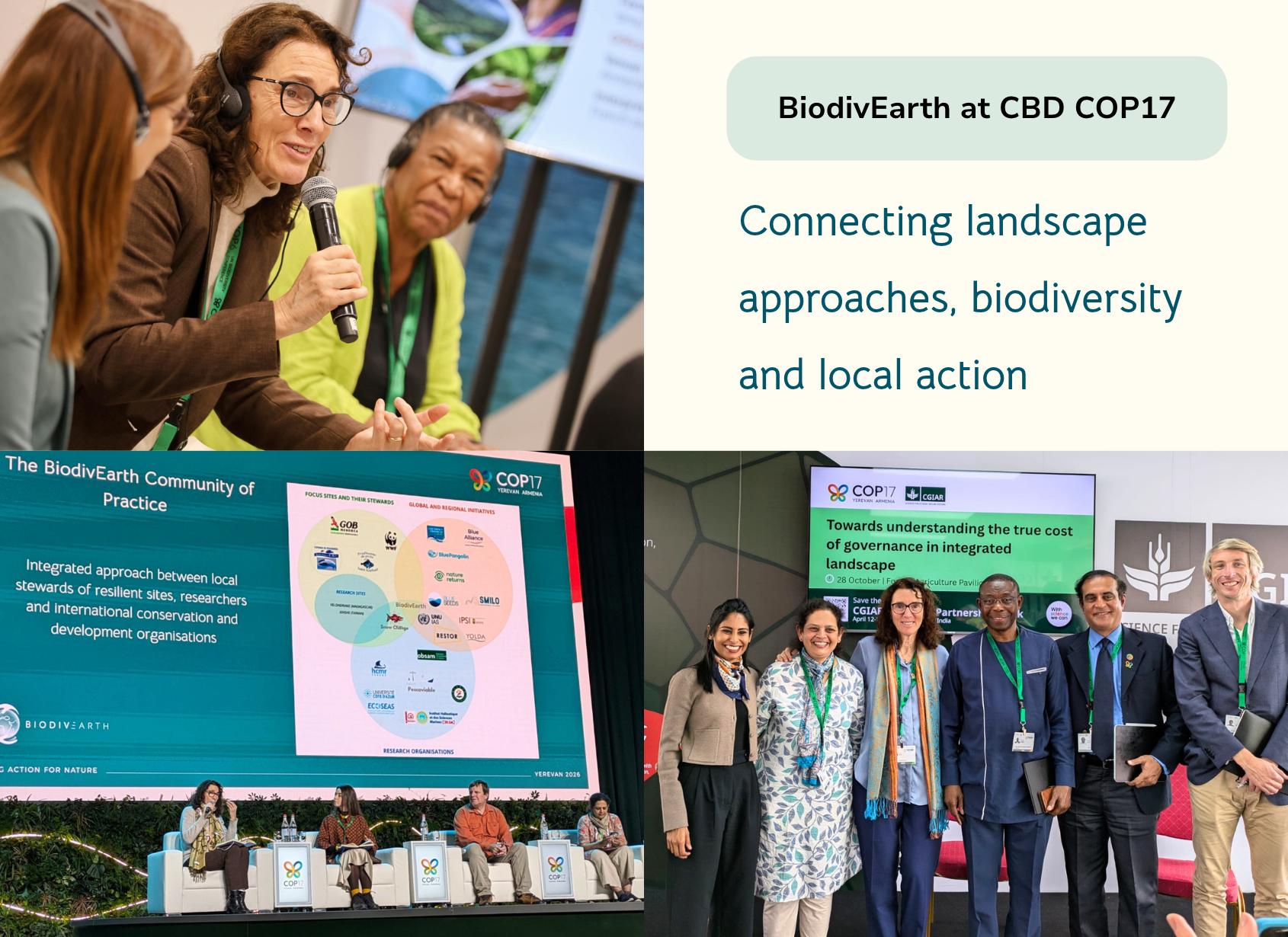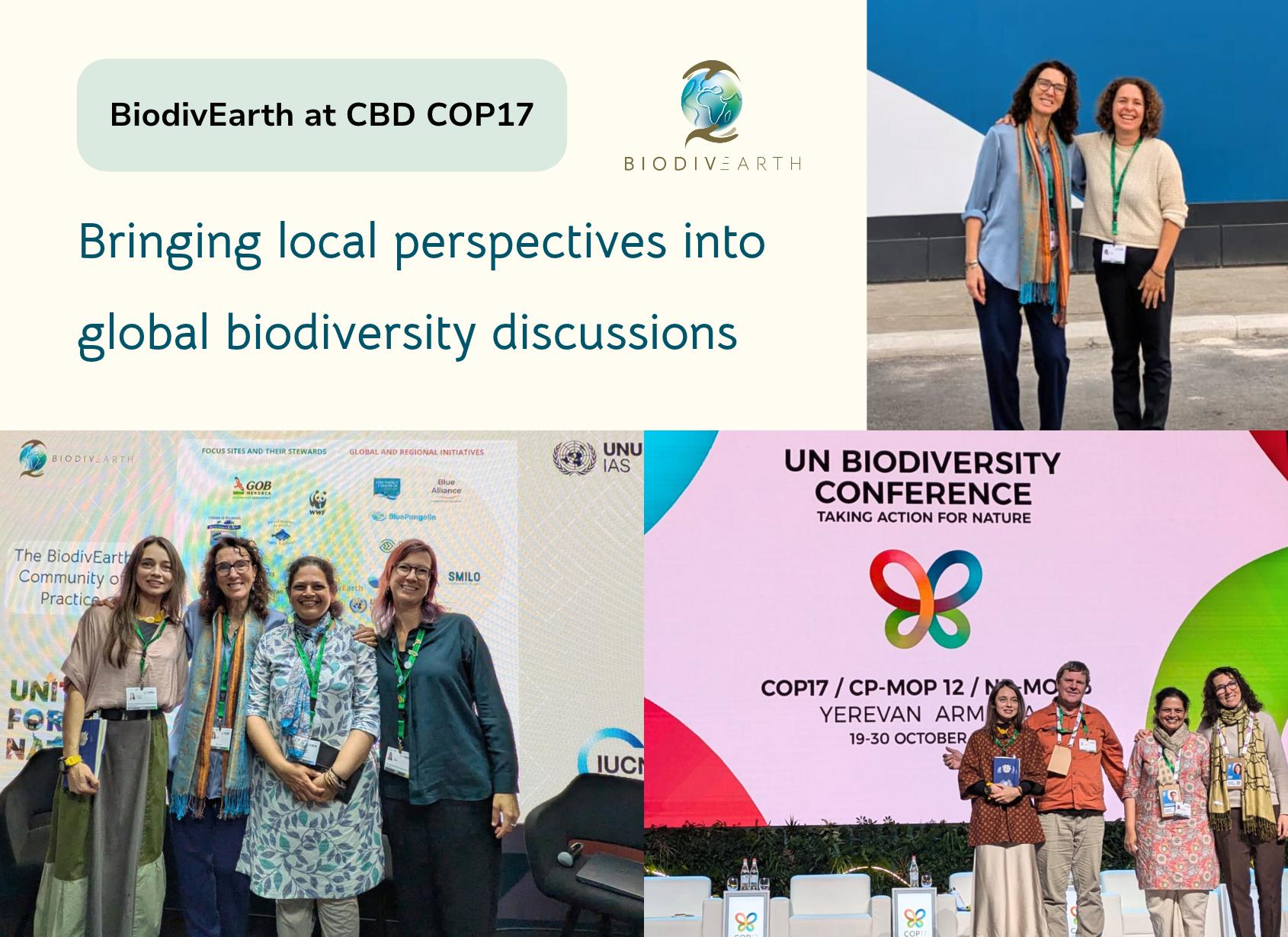
At the 17th Conference of the Parties to the Convention on Biological Diversity (CBD COP17) in Yerevan, Armenia, BiodivEarth brought the work of its Community of Practice into international discussions, exchanged with organisations working on related issues and explored new opportunities for collaboration.
Bringing local experience into global discussions
COP17 offered an important opportunity to share the experiences and perspectives of BiodivEarth’s Community of Practice (CoP) with a wider international audience. BiodivEarth co-led two side events with the United Nations University Institute for the Advanced Study of Sustainability (UNU-IAS), one at the IUCN Pavilion in the official zone of the Conference (Blue Zone) and the other in the CBD COP17 Green Zone, open to a wider audience. Both explored how resilience can be assessed and monitored in ways that reflect local realities and the complexity of socioecological landscapes and seascapes.
Drawing on the experience of ScapesLab with the Xinshe SEPLS in Taiwan, alongside contributions from the International Union for Conservation of Nature (IUCN) and the ICCA Consortium Europe, the discussions highlighted the need for indicators that look beyond ecological conditions to include socioeconomic, cultural and governance dimensions. They also reinforced the importance of involving local communities in designing and using these indicators, so that monitoring can support learning, adaptive management and decision-making on the ground.
Bringing new insights into our research
Several points raised during the sessions are particularly relevant to BiodivEarth’s ongoing work. Indicators need to be accessible and adapted to local contexts, while allowing for some common approaches across sites. Recognising Indigenous and local knowledge as well as women roles and rights, ensuring that different voices are heard, and accounting for the time and resources required for meaningful participation are also essential.
These takeaways will help us further refine our research protocols as we approach the end of Phase 1 and bring new perspectives to the development of our approach. They will be particularly useful as we consolidate our findings and consider how to turn them into practical tools that can support site managers in assessing and strengthening resilience.
Expanding our network and visibility
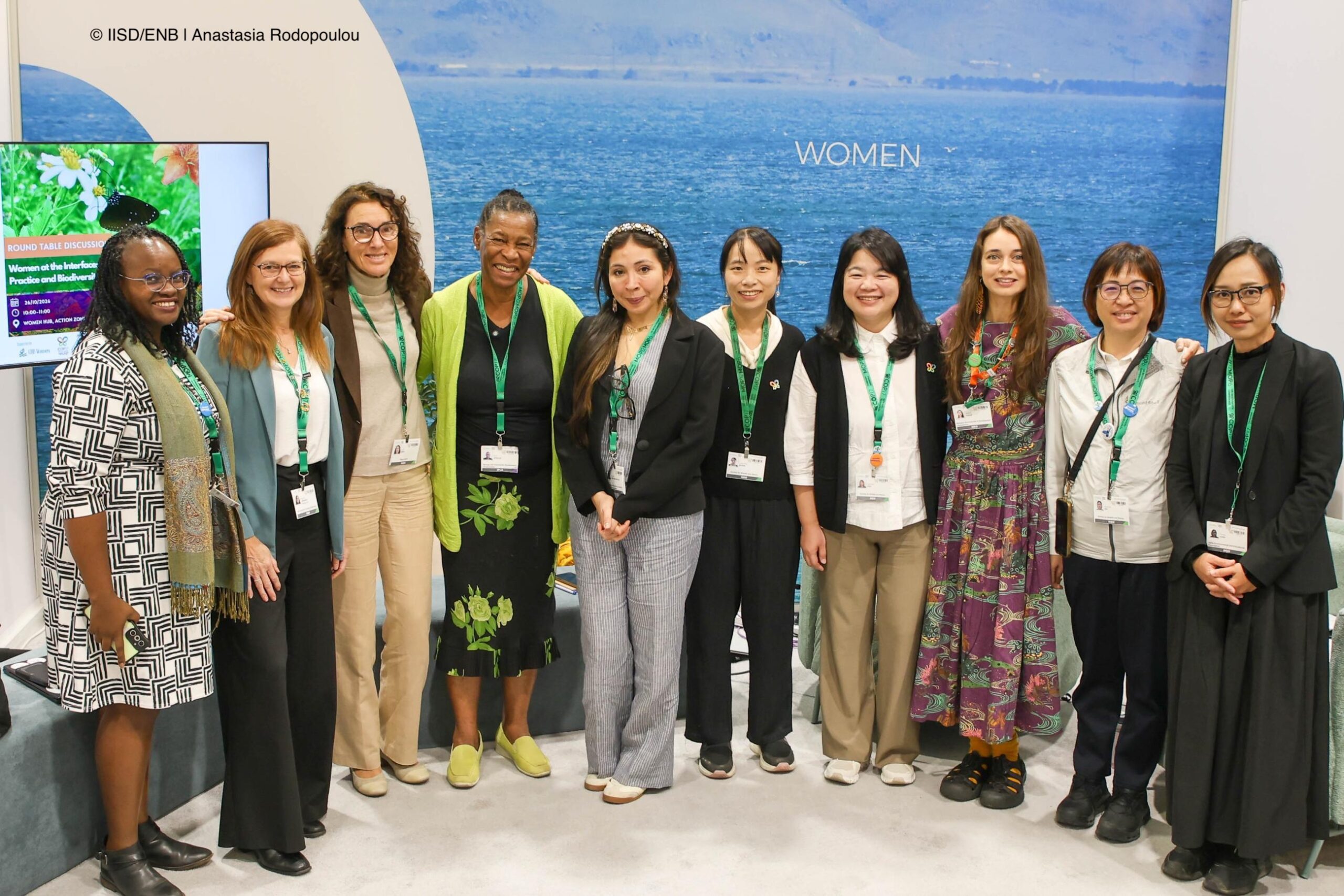
Beyond the sessions, COP17 provided an opportunity to meet and exchange with organisations, researchers and initiatives working on integrated landscape approaches, biodiversity monitoring and knowledge-sharing. It was also a chance to meet in person with representatives of our Community of Practice members, including the International Partnership for the Satoyama Initiative (IPSI) and ScapesLab at National Dong Hwa University.
BiodivEarth also took part in discussions around the potential development of a platform proposed by the CGIAR System connecting existing landscape initiatives. This exchange, alongside many informal conversations throughout the conference, helped us identify networks and initiatives that could be relevant to the CoP and that we may explore connecting with in the future.
Taking part in COP17 also increased BiodivEarth’s visibility within the international biodiversity community. Sharing our approach and the work of the CoP with new audiences was a valuable opportunity to broaden our reach and open up possibilities for future exchanges and collaboration.
Looking ahead
The discussions and connections made in Yerevan will continue to inform BiodivEarth’s work beyond the conference. They will feed into the final stages of Phase 1 research, while helping us identify opportunities to deepen knowledge-sharing across sites, strengthen the Community of Practice and further develop practical approaches to resilience assessment, and start discussing with investors the development of a toolbox and services that could be offered in the medium-term by BiodivEarth and its CoP.
For BiodivEarth, COP17 was not only a chance to present its work, but also to learn from others, test ideas through exchange and bring new perspectives into the project. It was an encouraging step in connecting the experiences of our pilot sites and partners with a wider international community working towards more resilient socioecological landscapes and seascapes.
We are grateful to our partners, speakers and everyone who took part in these exchanges, and look forward to building on the connections and ideas that emerged in Yerevan.