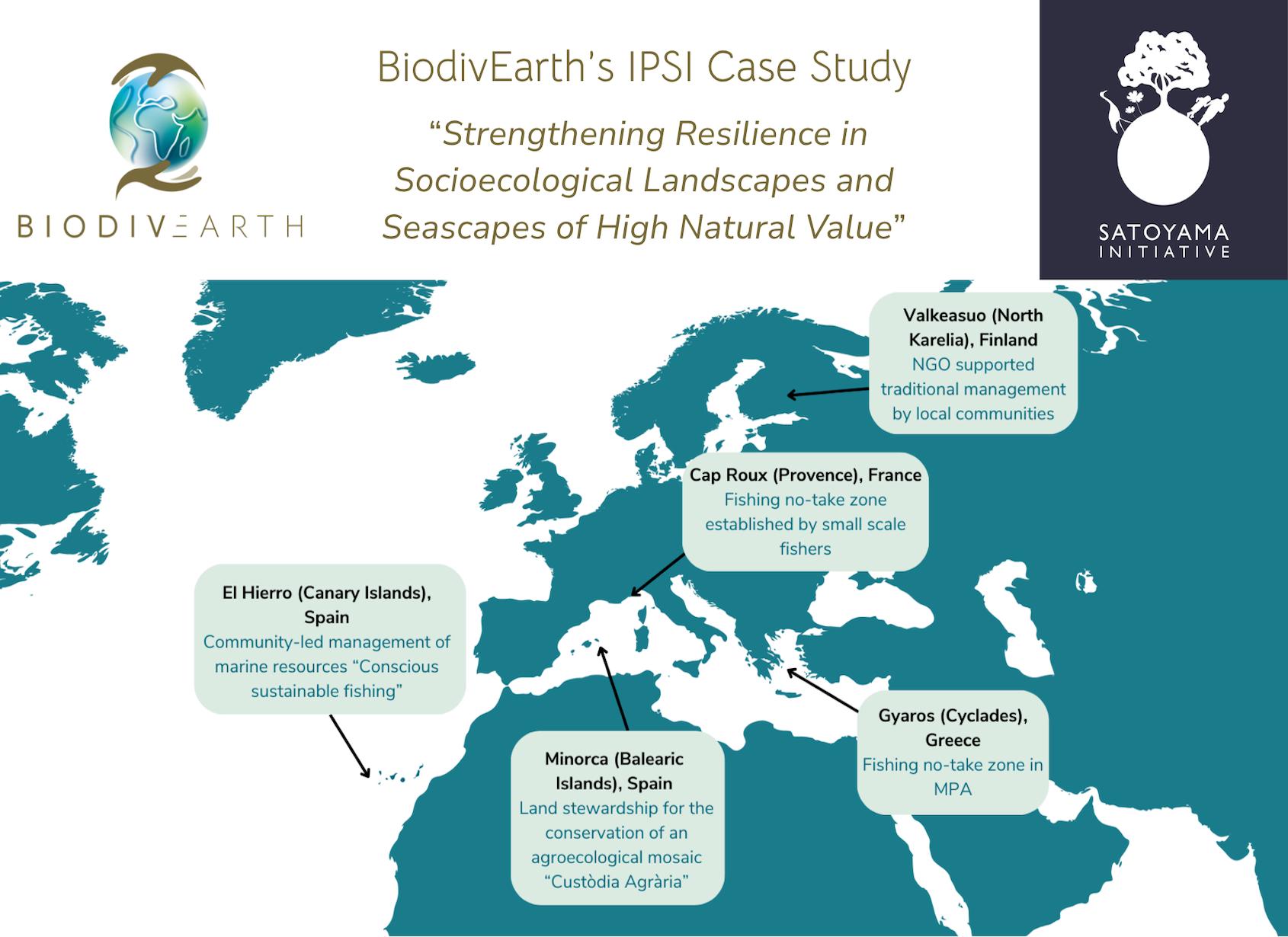
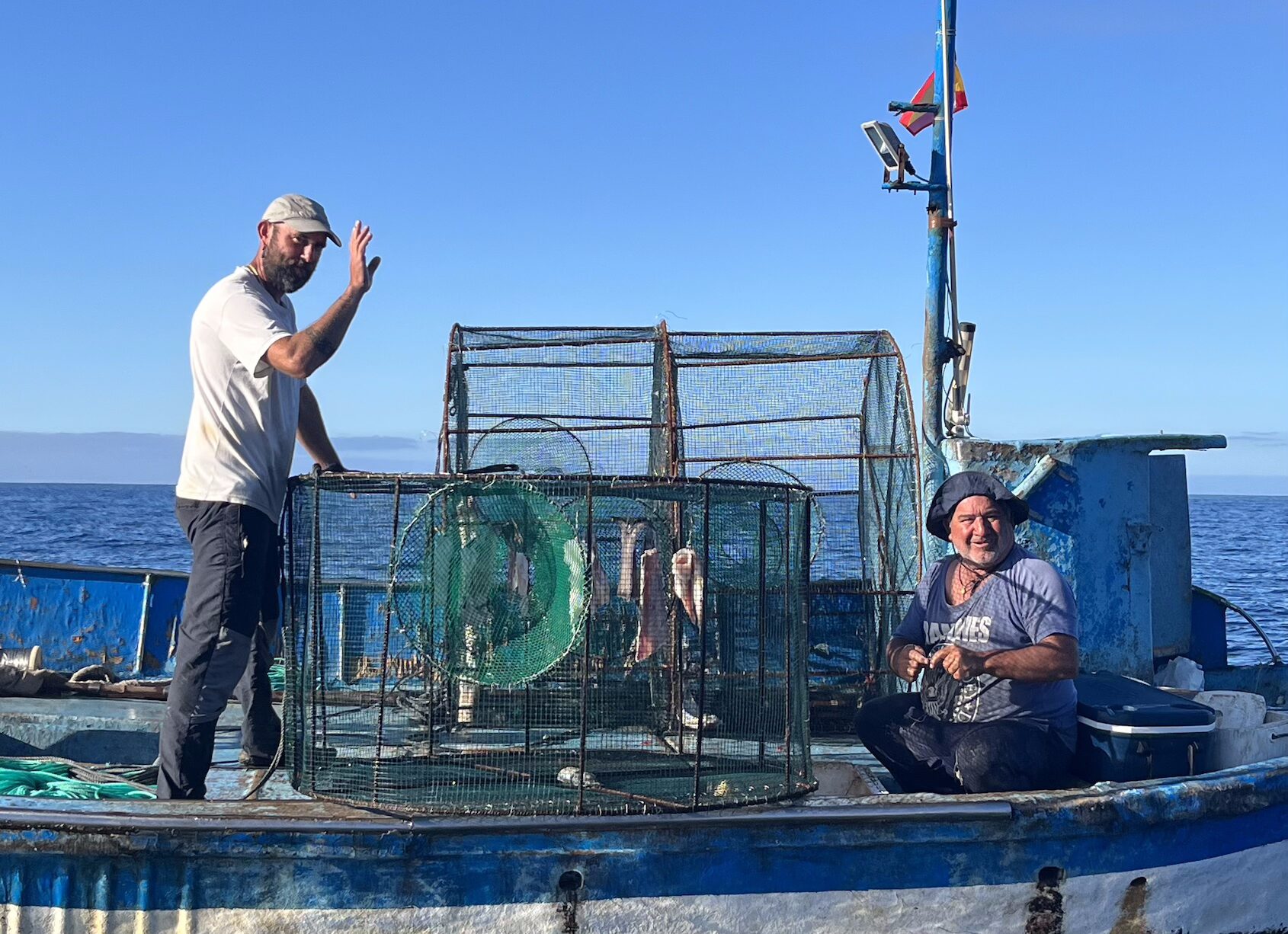
El Hierro (Canary Islands) is renowned for its rich, well-preserved marine biodiversity and stands as a living example of sustainable small-scale fishing, where tradition and respect for the sea go hand in hand. Earlier this month, during our visit to the pilot site of El Hierro for the second meeting of our Community of Practice, we had the opportunity to explore the fishing techniques practiced by fishers from the Cofradía de Pescadores Nuestra Señora de los Reyes in the small village of La Restinga.
For decades, fishers from the cofradía have agreed to preserve marine resources by adopting restrictive measures, such as increasing minimum catch sizes for the most vulnerable species and eliminating high-impact fishing gear. They have also supported the creation of protected areas such as the Punta de La Restinga-Mar de Las Calmas marine reserve and the implementation of biological stops at specific times, including during environmental disturbances. Negotiations are currently underway to establish Spain’s first entirely marine national park.
Collaboration with the Pescarestinga Cooperative
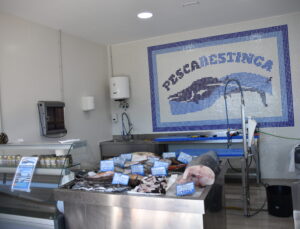
We were delighted to discover the fishers’ know-how and the way they collaborate with the Pescarestinga cooperative, which works alongside the cofradía to market their catch. Founded in 1990, the sea cooperative embodies the spirit of collaboration among local fishers. Its goal is to protect and promote their products while ensuring the highest profit margin for fishers, providing stability and quality in an ever-changing market. We also had the opportunity to see how the fish are prepared and stored and to visit the self-managed fish market where locals and visitors can buy freshly caught products directly.
Discovering Four Traditional Fishing Techniques
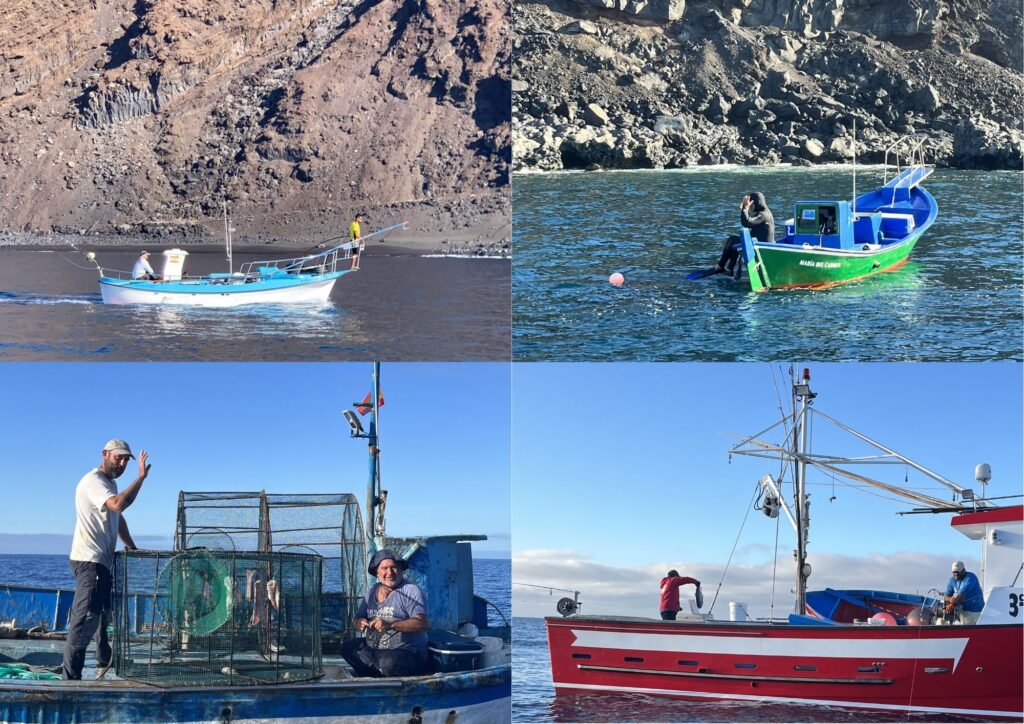
Going out to sea with the fishers, we observed four fishing techniques firsthand, each demonstrating skill, precision, and respect for the ocean. Our experience was enriched by explanations from fishers, local researchers, practitioners, and representatives of the Punta de La Restinga–Mar de Las Calmas marine reserve and the Biosphere Reserve. These practices illustrate how small-scale fishing in El Hierro combines traditional knowledge with careful resource management.
The rod-and-harpoon technique used for wahoo, known as “pesca de peto a la vara,” is particularly notable for its precision. From the bow of the boat, the fisher launches a harpoon at the wahoo (Acanthocybium solandri) using a solid wooden rod, sometimes with the help of a wooden and fibre lure to attract the fish. Each catch is individual, which helps protect wahoo populations, minimizes accidental captures, and avoids disturbance to the seabed. This method illustrates the balance between tradition and marine conservation.
To catch viejas (Sparisoma cretense) fishers practice “pesca de vieja al puyón” while snorkelling along shallow rocky bottoms. The fisher manipulates the puyón, a floating device consisting of a nylon line, a hook, a float, and a small weight, using bait such as a small crab called “araña” (Percnon gibbesi). The hook is placed directly in front of the selected fish, ensuring a targeted catch. Unwanted or undersized fish are released immediately, and there is no destructive contact with the seabed. This technique reflects local expertise, where observation, patience, and respect for the ecosystem are essential.
Shrimps (Plesionika spp.) are harvested using “nasa de camarón,” cylindrical plastic mesh traps baited with fish or chicken scraps and placed at depths ranging from 200 to 400 meters. The traps include safety features that prevent ghost fishing in the unlikely event of accidental loss. They are highly selective and have a negligible impact on benthic habitats. Attracted by the scent, shrimps enter through a funnel-shaped opening that prevents them from escaping. The traps remain in the water for only one day, allowing the catch to be sorted and unwanted or undersized specimens to be released, while their position can be monitored at all times.
Finally, bottom fishing for demersal resources, or “pesca a fondo de recursos demersales de profundidad,” targets fish that live near the seabed using weighted lines equipped with multiple baited hooks. The lines rest on rocky or volcanic seabeds before being hauled in manually. This artisanal method allows for selective fishing, with direct control over the catch and the ability to release unwanted fish. Unlike trawl nets, it does not harm habitats and demonstrates how tradition and sustainable resource use can coexist.
A pillar of identity
In El Hierro, artisanal fishing is not just a profession. It is a pillar of the island’s identity, demonstrating the community’s commitment to preserving marine resources. Every action taken by the fishers is designed to maintain healthy ecosystems, support biodiversity, and pass on centuries-old know-how to future generations. Our three-day workshop on the island provided deeper insight into the factors behind the resilience of the El Hierro model and expanded our understanding of commercialisation strategies and lessons learned across pilot sites.
We are grateful to the local authorities who welcomed us and facilitated this encounter, including the Cabildo Insular de El Hierro, the Ayuntamiento de El Pinar, and the Gobierno de Canarias. We also thank the fishers of the cofradía, the Pescarestinga cooperative, researchers, and representatives of the marine and Biosphere reserves for their warm welcome. Their knowledge and generosity made this experience truly unforgettable.
Explore our partners’ social medias
- Discover Pescarestinga’s Facebook page and their Instagram post on our visit
- And the Biosphere Reserve’s Instagram post on our visit